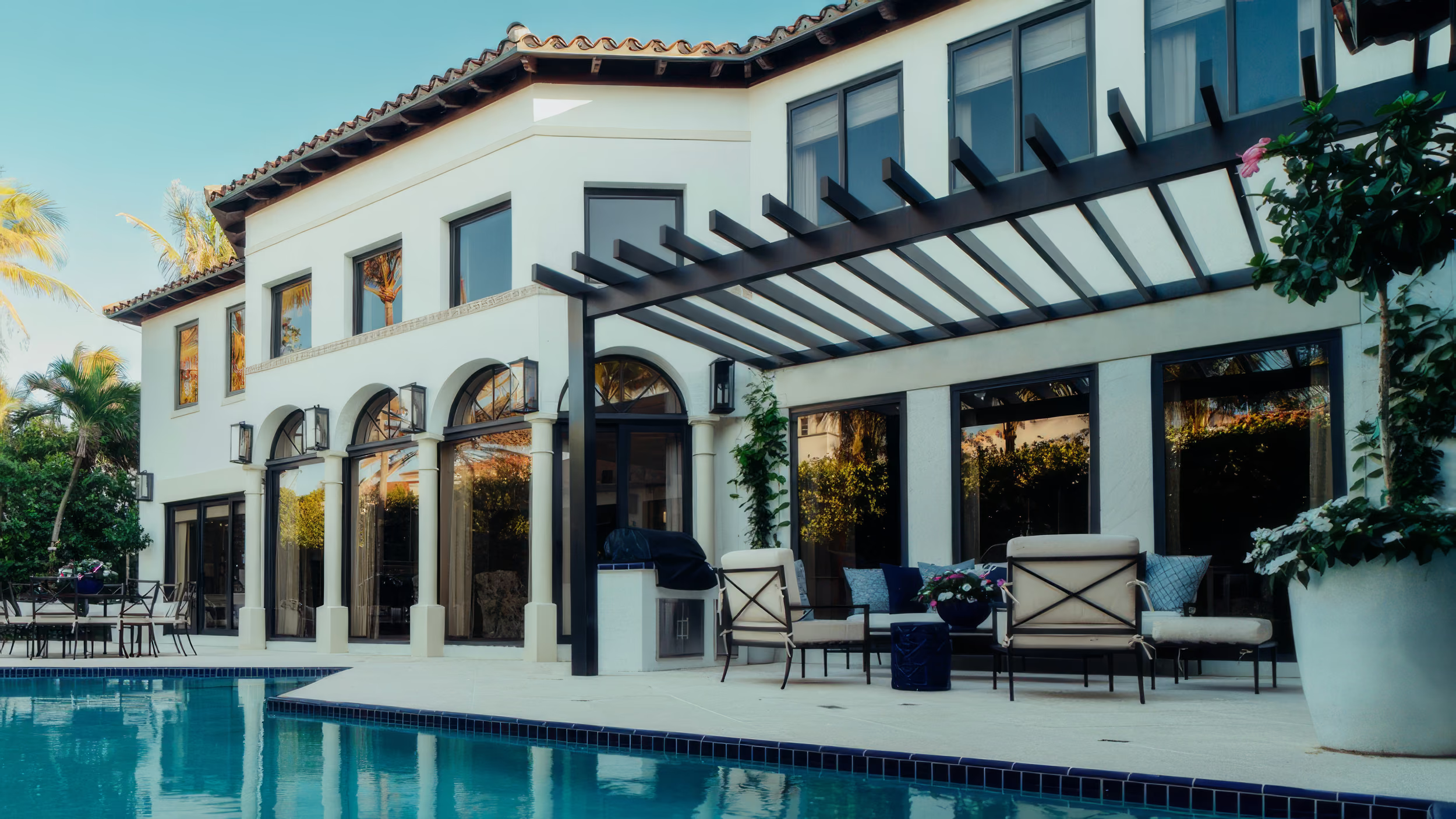
Best Pergola Materials for Coastal Homes in Florida
Top pergola materials for Florida coastal homes.
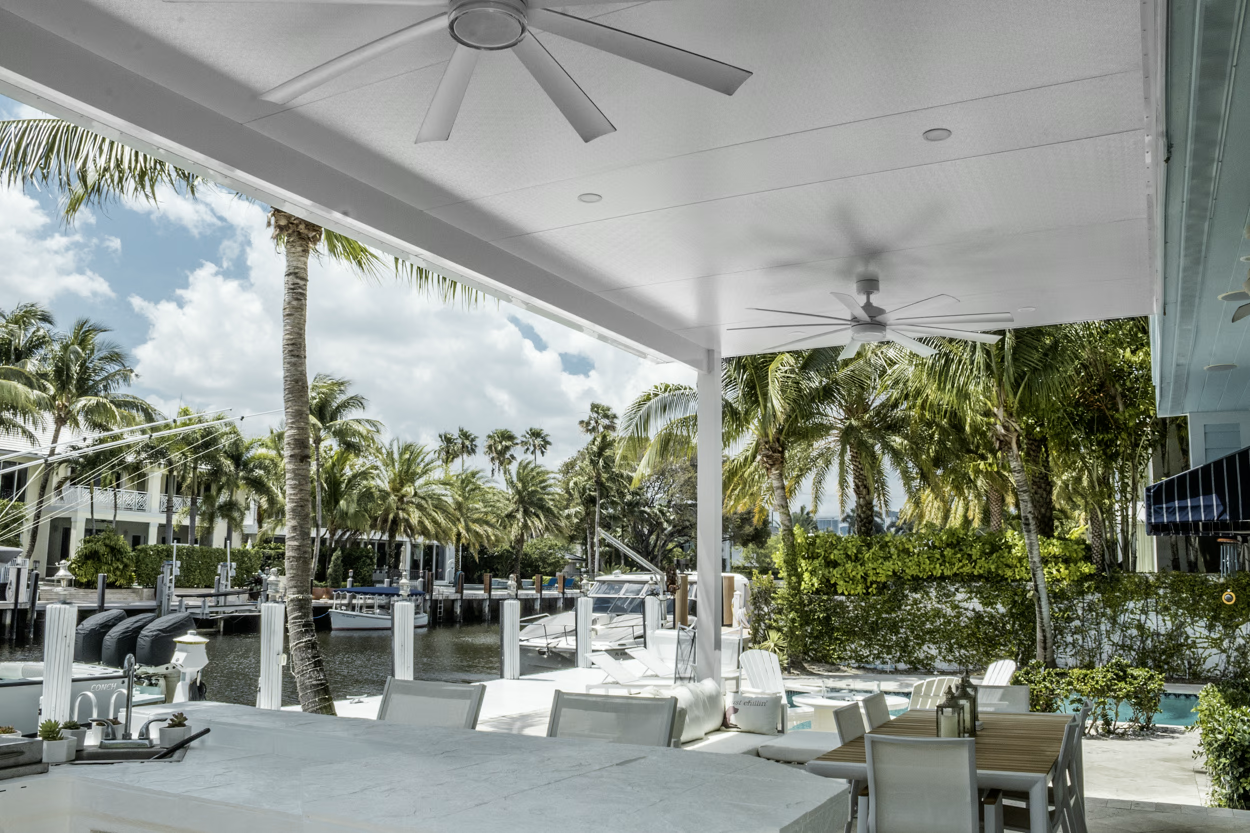
Living on the coast in Florida is a privilege.
It’s also a structural challenge.
Salt air, humidity, UV exposure, and hurricane-force winds destroy inferior materials faster than most homeowners expect. If you’re investing in a pergola for a waterfront property, choosing the wrong material can cost you tens of thousands in repairs or replacement.
So what are the best pergola materials for coastal homes in Florida?
Whether you’re in Jupiter, Fort Lauderdale, or Boca Raton, here’s what you need to know before building near salt water.
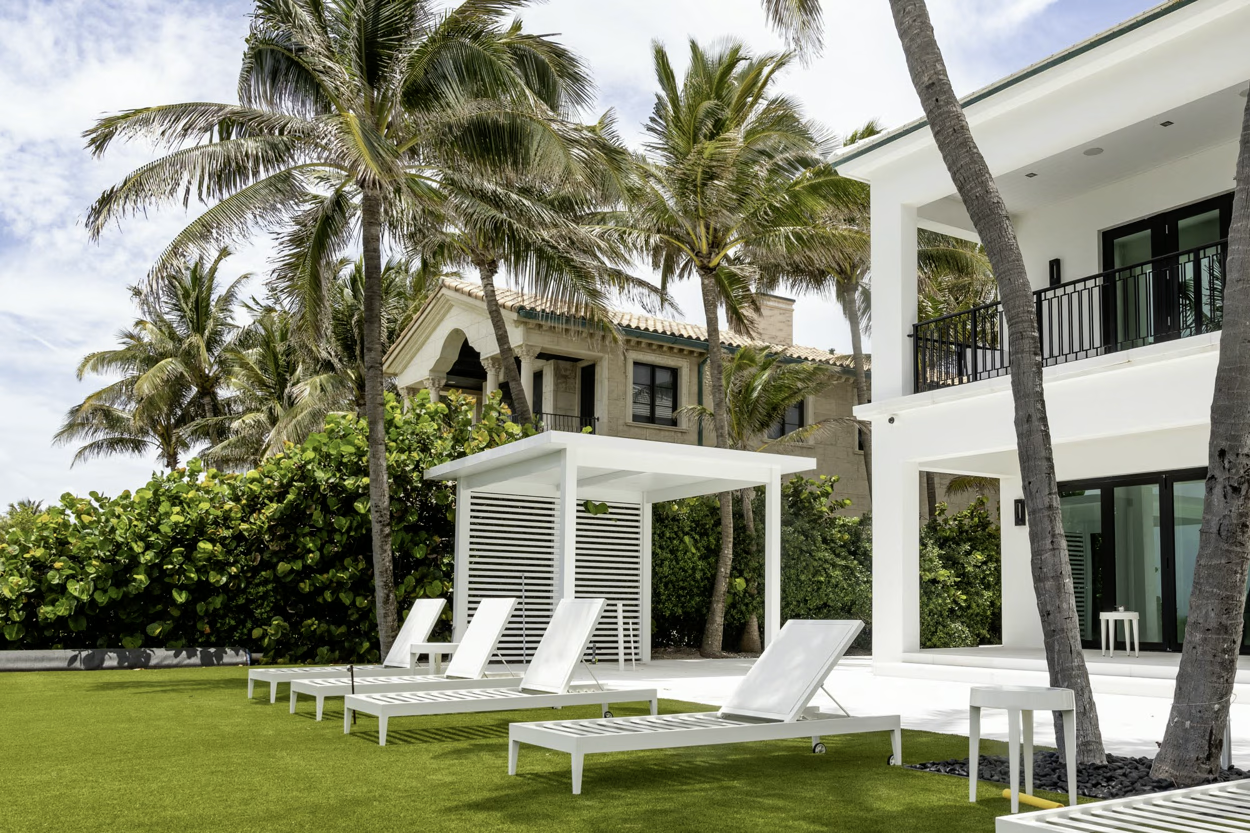
Why Coastal Florida Is So Hard on Materials
Before comparing options, understand the threats:
- Salt-laden air accelerates corrosion
- Constant humidity promotes rot and mildew
- Intense UV degrades finishes
- Hurricane winds stress structural connections
Waterfront homes in Palm Beach Gardens and canal properties in Fort Lauderdale sit in Exposure Category D wind zones — the most aggressive classification.
Material selection is not aesthetic.
It’s structural risk management.
1. Extruded Aluminum (Best Overall Choice)
For coastal Florida homes, extruded aluminum is the gold standard.
Why Aluminum Performs
- Naturally corrosion-resistant
- Lightweight yet structurally strong
- Compatible with marine-grade powder coating
- Ideal for motorized louvered roof systems
- Meets Florida Building Code wind-load requirements
Premium systems from manufacturers like StruXure and Azenco Outdoor are engineered specifically for high-wind and coastal environments.
Add Marine-Grade Powder Coating
Look for:
- Kynar 500 finishes
- Multi-layer powder coating systems
- UV-resistant formulations
This prevents chalking, fading, and salt corrosion.
Best For:
- Waterfront estates
- Canal-front homes
- Motorized louvered roof systems
- Long-term, low-maintenance installations
2. Stainless Steel Components (Essential — Not Optional)
Even if your structure is aluminum, fasteners matter.
Coastal homes require:
- Marine-grade stainless steel fasteners
- Corrosion-resistant brackets
- Galvanic isolation between metals
Inferior screws will rust, expand, and stain your structure.
Engineering details determine lifespan.
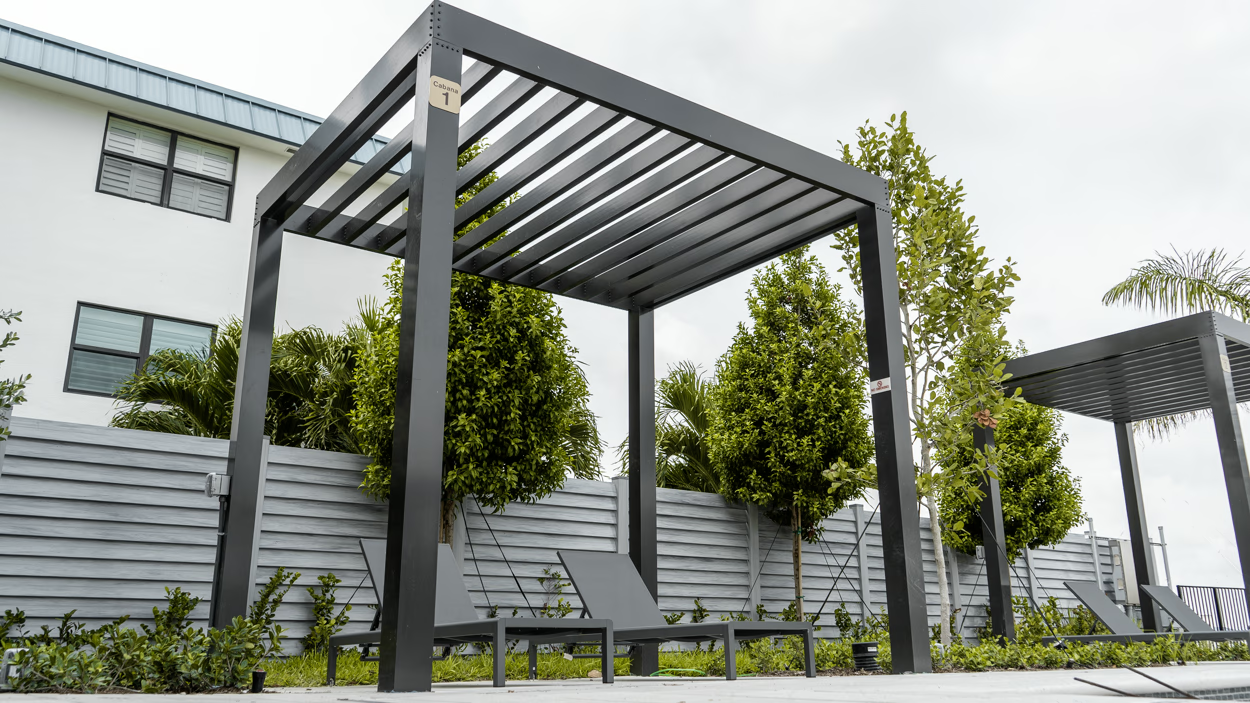
3. Wood Pergolas (High Maintenance & High Risk)
Wood is visually appealing — but coastal Florida is unforgiving.
Common problems include:
- Rot from humidity
- Termite exposure
- Warping under UV
- Constant staining or sealing
- Structural weakening over time
Even pressure-treated lumber struggles in salt-air environments.
In high-end communities in Boca Raton, wood pergolas are increasingly being replaced with aluminum alternatives that mimic wood grain but resist decay.
Best For:
- Inland properties
- Low-wind zones
- Homeowners willing to commit to ongoing maintenance
4. Steel Pergolas (Strong but Corrosion-Prone)
Steel offers strength — but without proper galvanization and coating, it corrodes rapidly in coastal settings.
Even galvanized steel can suffer:
- Surface rust
- Pitting
- Structural degradation
It requires:
- Professional-grade coatings
- Regular inspection
- Maintenance commitment
For most coastal homeowners, aluminum offers better long-term performance with less upkeep.
5. Polycarbonate & Hybrid Systems
Polycarbonate roof panels can provide rain protection while allowing filtered light.
However:
- They may discolor over time
- Not all systems meet high wind-load requirements
- Heat gain can be significant
They are typically secondary to aluminum systems in coastal luxury builds.
Hurricane Performance: Material + Engineering
The best material still fails without proper engineering.
Coastal pergolas must include:
- 170–175+ mph wind-load rating
- Deep reinforced concrete footings
- Sealed structural engineering plans
- Florida Building Code compliance
- Proper uplift anchoring
Homes in Broward County and Palm Beach County must comply with strict high-wind standards .
Material choice is only half the equation.
Cost Expectations for Coastal Pergolas
Luxury aluminum pergolas in coastal Florida typically range:
$85 – $150+ per square foot installed
Waterfront properties may trend toward the higher end due to:
- Exposure Category D engineering
- Deeper footings
- Enhanced corrosion protection
- HOA architectural requirements
Most coastal projects fall between:
- $45,000 – $120,000+
- Estate-level installations exceed $150,000
Premium materials justify long-term durability .
HOA & Architectural Considerations
Waterfront communities often require:
- Color matching
- Mediterranean or modern design alignment
- Concealed drainage
- Detailed renderings
Communities such as Royal Palm Yacht & Country Club enforce strict architectural review standards.
Working with a design-build firm experienced in HOA navigation reduces delays.
Key Takeaways
For coastal Florida homes, the best pergola materials are:
- Extruded aluminum with marine-grade powder coating (best overall)
- Marine-grade stainless steel fasteners (mandatory)
- Engineered concrete footings
- Florida Building Code compliance
Wood and untreated steel simply cannot match the longevity of properly engineered aluminum in salt-air environments.
Conclusion: Build for Salt, Wind & Sun
Coastal Florida demands more from outdoor structures.
The right material choice determines whether your pergola lasts:
- 3–5 years
- Or 20+ years
If you’re planning a waterfront pergola in Jupiter, Boca Raton, Fort Lauderdale, or anywhere along Florida’s coast:
Work with the trusted aluminum pergola and louvered roof expert serving Palm Beach and Broward County.
More on Pergola Maintenance & Care
Rescreen or Replace Your Pool Screen Enclosure?
How to tell whether your screen enclosure needs new mesh or a new frame.
Step-by-Step: Building a Custom Pergola in South Florida
Step-by-step guide to planning and building a custom pergola in South Florida.
HOA Rules for Pergolas in South Florida Communities
HOA requirements for pergolas in South Florida explained.