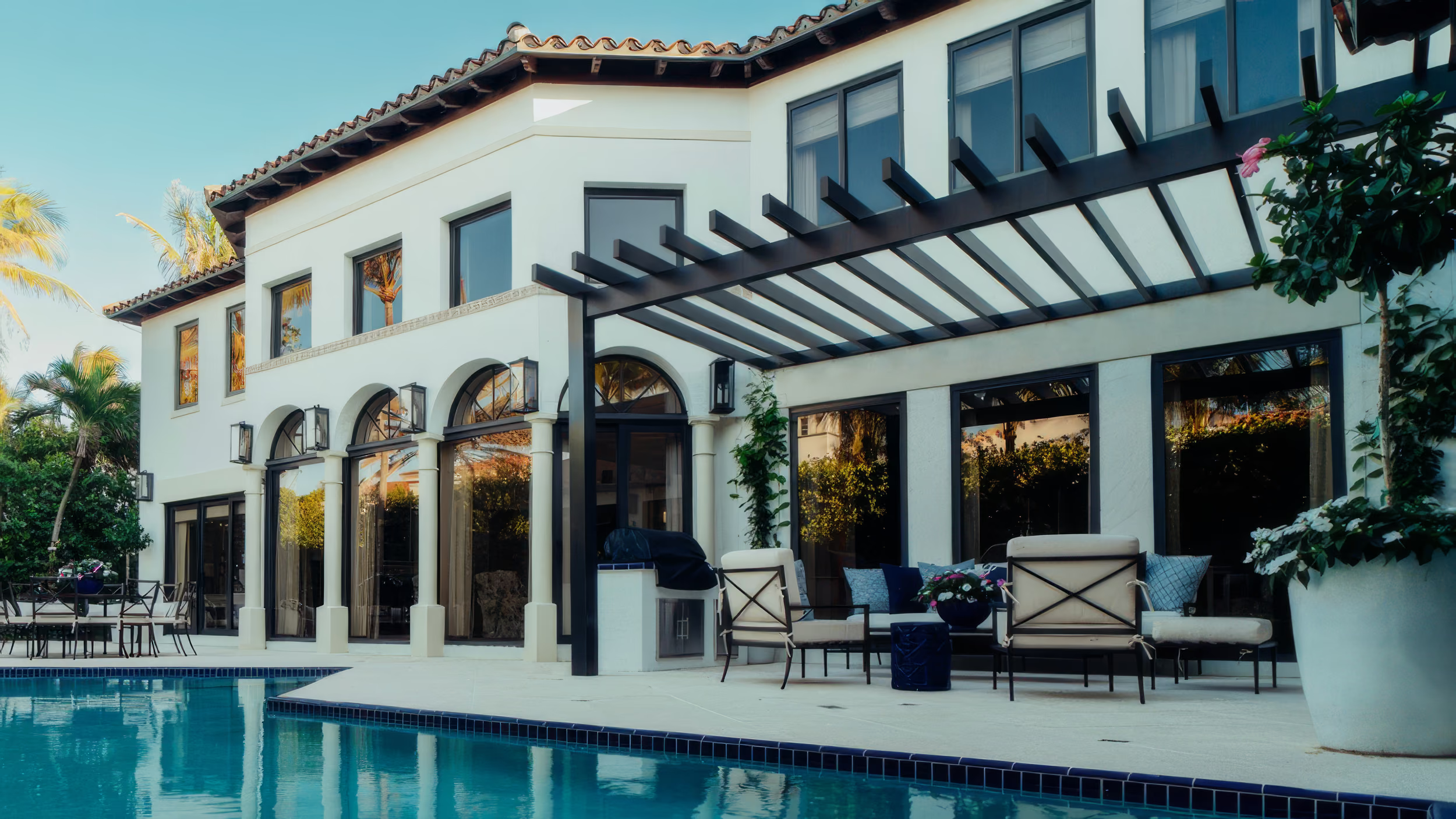
Rescreen or Replace Your Pool Screen Enclosure?
How to tell whether your screen enclosure needs new mesh or a new frame.
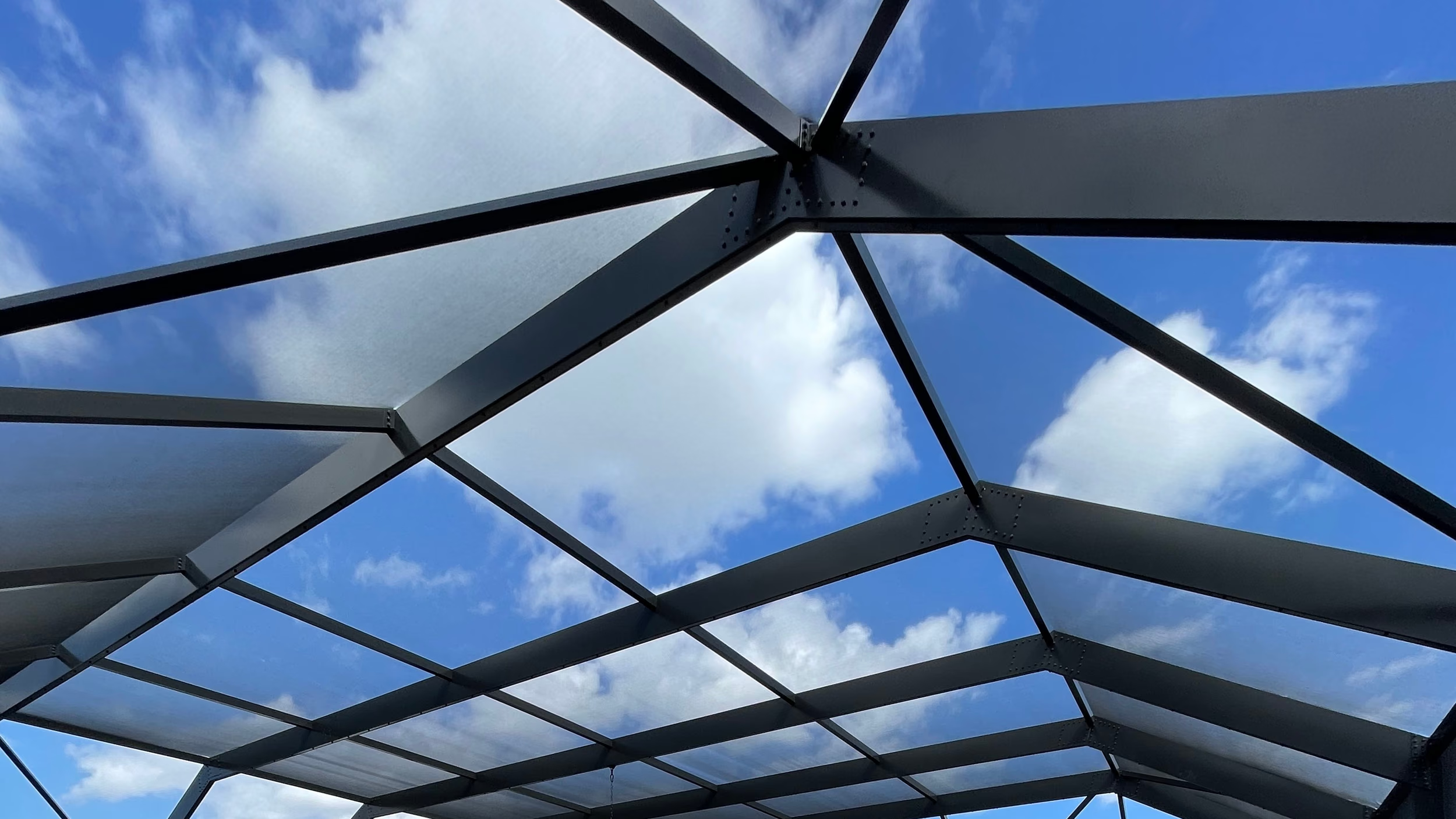
In South Florida a pool screen enclosure works every day: sun on the mesh, salt in the air, afternoon storms and the occasional hurricane. Sooner or later it starts to look tired, and the question is always the same — is new mesh enough, or does the cage itself need to be replaced?
The answer depends less on the screen than on the aluminum frame behind it.
Mesh Wears Out Before the Frame
Sun is what ages screen mesh, so the south and west faces usually go first, while the shaded faces can last years longer. Faded, brittle or sagging panels, small tears and loose splines are normal wear.
Panels can be replaced one at a time, so worn mesh on its own is a rescreening job: new screen on the existing frame, without touching the structure.
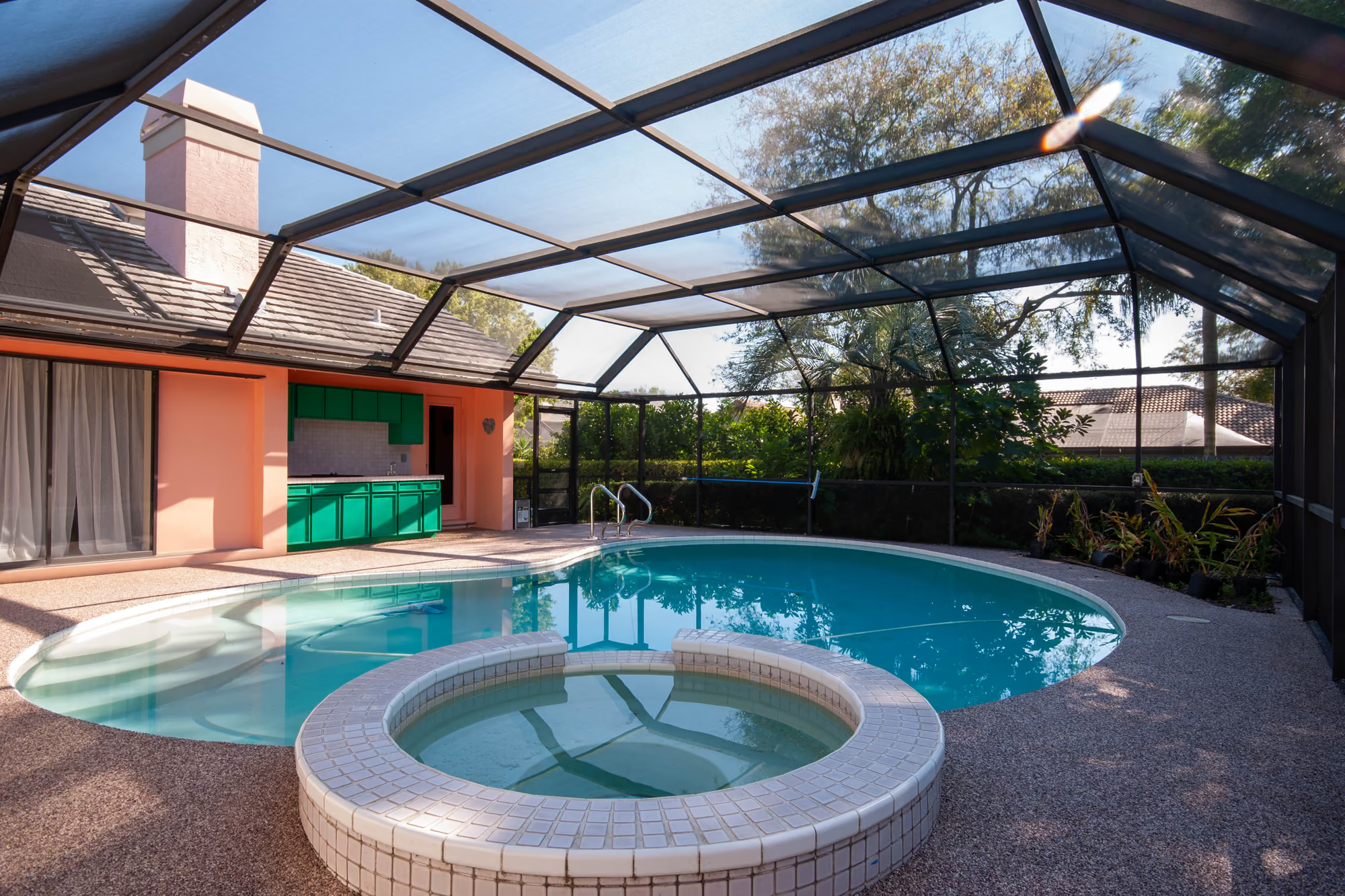
Signs the Frame Is the Problem
Look past the screen and check the structure. New mesh will not fix any of these:
- Corrosion or pitting on the aluminum, especially near the ground, around fasteners and on coastal lots
- Beams or posts that are bent, cracked or out of line
- Loose or missing fasteners, or connections that move when you push on them
- Doors that no longer close or latch properly
- Damage left by a storm
Any one of these is worth having inspected before you spend money on new screen.
When Replacing the Whole Enclosure Makes Sense
A full replacement usually comes down to the structure: a frame that is corroded or damaged, a cage built to older wind requirements, or a shape that no longer fits the way you use the space. It is also the moment to rethink the design instead of copying the old one. The options are on our screen enclosures page:
- Roof shape: a mansard cage sits lower, while a gable or dome gains headroom over a pool
- Mesh by face: standard insect screen, tighter no-see-um mesh near the water, solar screen where the sun hits hardest and pet-resistant mesh on the lower panels
- Doors and kickplates fitted to how the space is used
Mixing mesh types on the same cage is usually the right answer, rather than paying for the most expensive screen everywhere.
Code, Permits and the Pool Barrier
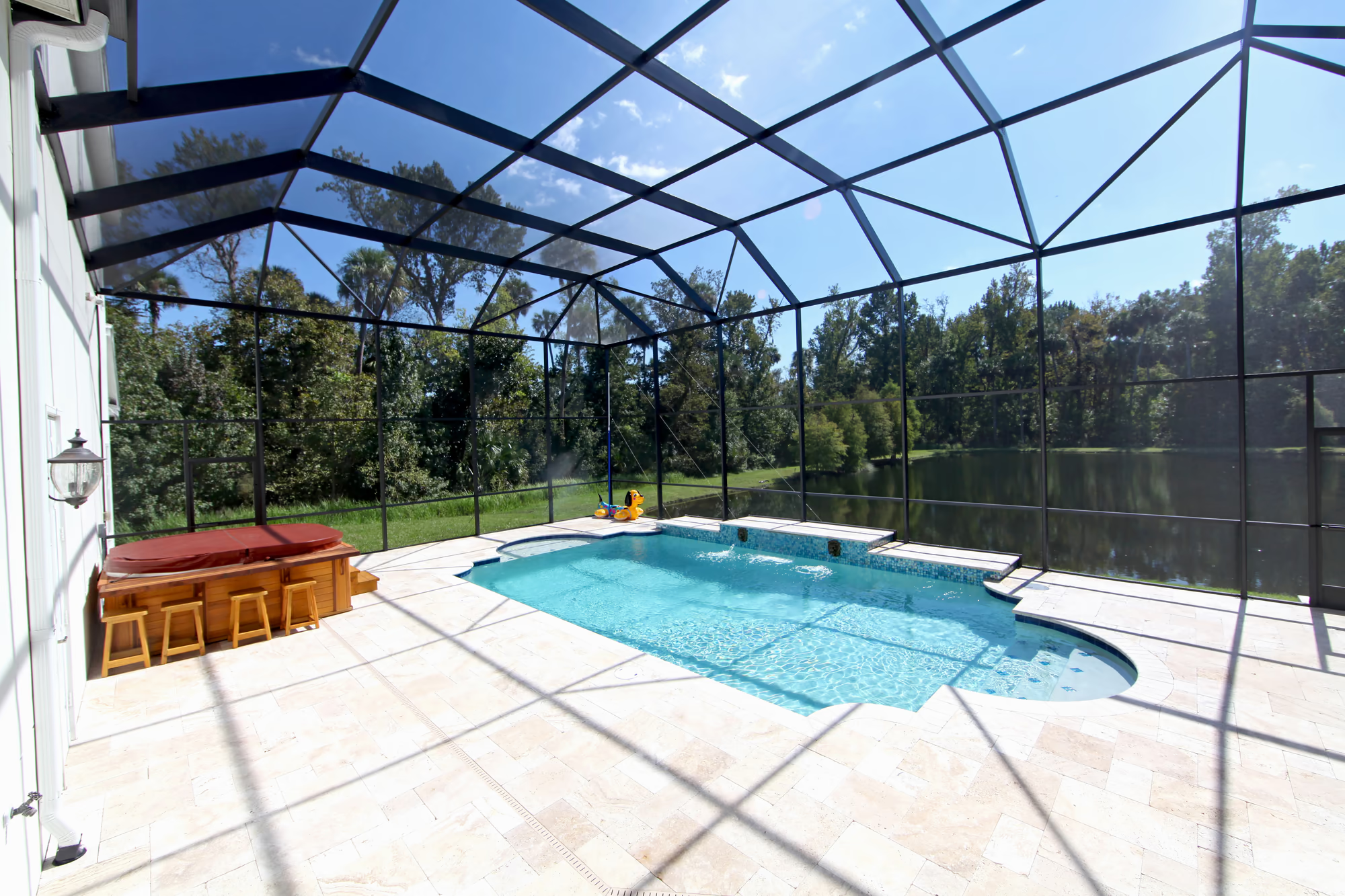
A new enclosure is a structure, and in South Florida it has to be engineered to local wind-load requirements. Replacing the frame is structural work and needs a permit. Whether rescreening alone needs one depends on the city, so confirm it before work starts.
If the enclosure is part of your pool barrier, the doors matter. Florida pool safety law accepts an enclosure that fully surrounds the pool and meets the barrier requirements, including self-closing and self-latching doors. Plan for it at design, not afterwards.
Key Takeaways
- Worn, faded or torn mesh on a sound frame: rescreen the affected panels
- Corroded, bent or storm-damaged framing: have the structure inspected and plan for a replacement
- A replacement is the time to choose roof shape, mesh and doors again
- Frame work is permitted and engineered to local wind requirements
Conclusion: Start With the Frame
New mesh can make a tired enclosure feel new, as long as the frame behind it is sound. If you are not sure which one you need, an inspection answers it before you spend on the wrong fix.
Thinking about rescreening or replacing your pool enclosure?
Work with the trusted aluminum structure and screen enclosure expert serving Palm Beach and Broward County.
More on Pergola Maintenance & Care
Best Pergola Materials for Coastal Homes in Florida
Top pergola materials for Florida coastal homes.
Step-by-Step: Building a Custom Pergola in South Florida
Step-by-step guide to planning and building a custom pergola in South Florida.
HOA Rules for Pergolas in South Florida Communities
HOA requirements for pergolas in South Florida explained.