Restaurant Patio Enclosures in South Florida
The pieces of a restaurant patio enclosure — roof, screens, fans and heaters — and how they work together.
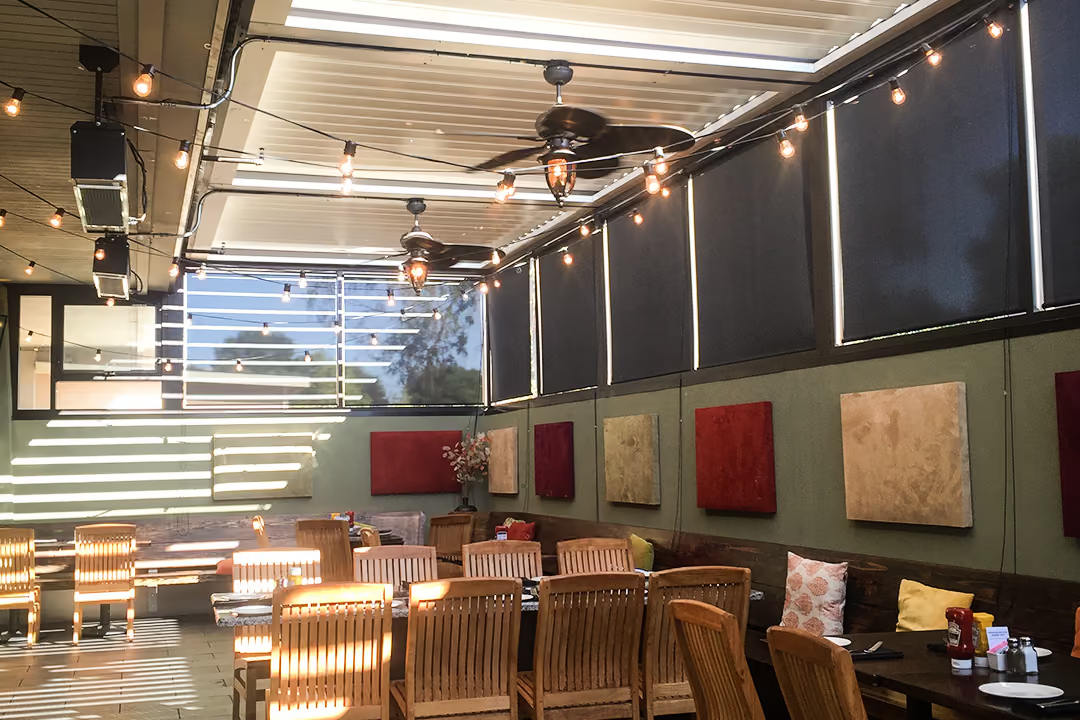
In South Florida an outdoor table is only worth what it earns on the days it can be used. Afternoon storms, midday sun, wind off the water and mosquitoes at dusk all take tables out of service. A patio enclosure is the set of pieces that keeps them open.
The Roof Comes First
Everything else hangs from the roof. A motorized louvered roof lets staff open the louvers for air and light on a good evening and close them when rain arrives, with the water routed through gutters in the beams and posts instead of onto guests. Rain sensors can close the louvers automatically.
Screens on the Sides
Motorized screens drop between the posts to block low sun, wind-driven rain and insects, then disappear into their housings when they are not needed. Most patios do not need every side screened: start with the side that takes the afternoon sun or the prevailing wind.
Comfort: Fans, Heaters and Light
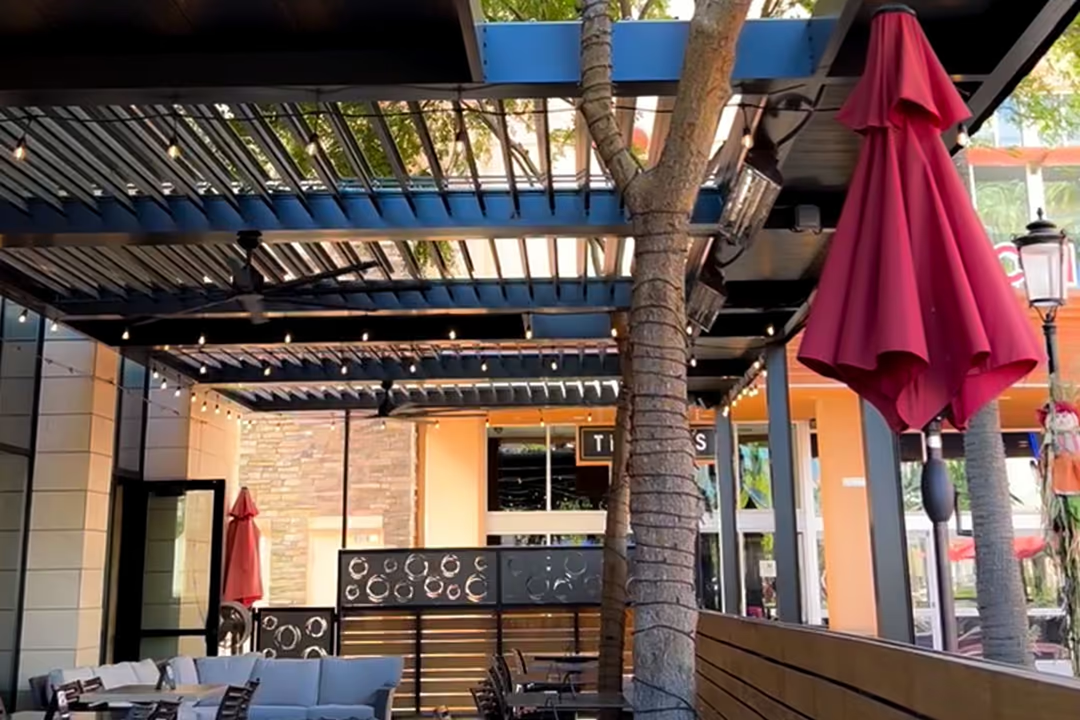
Ceiling fans move air on humid nights. Electric heaters keep the few cool evenings of winter usable. Integrated lighting turns the patio into a dinner space after sunset. All of them need power and controls, which is why they belong in the first drawing, not in a later change order.
Permits and the City
An enclosure on private property is a permitted structure engineered for local wind loads. Adding covered seats can also matter for occupancy, so confirm with the city how the patio counts before finalizing the layout. Seating on a public sidewalk is usually governed by a separate city permit.
Deciding Which Sides to Close
Stand on the patio at the hours you lose tables and note where the problem comes from. If guests move away from one side at four in the afternoon, that is the sun. If napkins fly on breezy nights, that is the wind side. If tables near the street feel exposed, that side needs privacy more than shade. Each answer points to a different screen fabric and, sometimes, to a fixed panel instead of a screen.
Built for Daily Service
A restaurant patio is opened and closed every day, cleaned every night and used by staff in a hurry. Simple controls, grouped so one switch sets the patio, make the system get used the way it was designed. Aluminum frames and screen fabrics clean with water and mild soap; louvers and gutters need occasional cleaning so leaves and debris do not block the drainage.
Installing Without Closing
Most of the work can happen outside service hours. Foundations and electrical rough-in come first, then the frame, the roof and the screens. On larger patios the job can be split so part of the seating stays open. Planning the electrical work with your electrician or GC early avoids opening finished floors and walls later.
Frequently Asked Questions
Can a patio enclosure be air-conditioned?
A screened patio is still an open-air space: screens cut sun, wind and insects, but they do not seal the room. Fans and heaters are the usual way to keep it comfortable. Turning a patio into conditioned interior space is a different project with different code requirements.
Do the louvers close by themselves when it rains?
Systems with a rain sensor can close the louvers automatically when rain is detected, so the patio is protected even if staff are busy. Staff can still open or close them manually at any time.
Key Takeaways
- A louvered roof handles sun and rain; screens handle the sides
- Screen the worst side first, not every opening
- Plan fans, heaters and lighting in the first design
- Check occupancy and sidewalk rules with the city early
Want to keep your patio tables open through the rainy season?
Work with a licensed and insured aluminum structure contractor serving Miami-Dade, Broward and Palm Beach County.
More on Commercial Projects
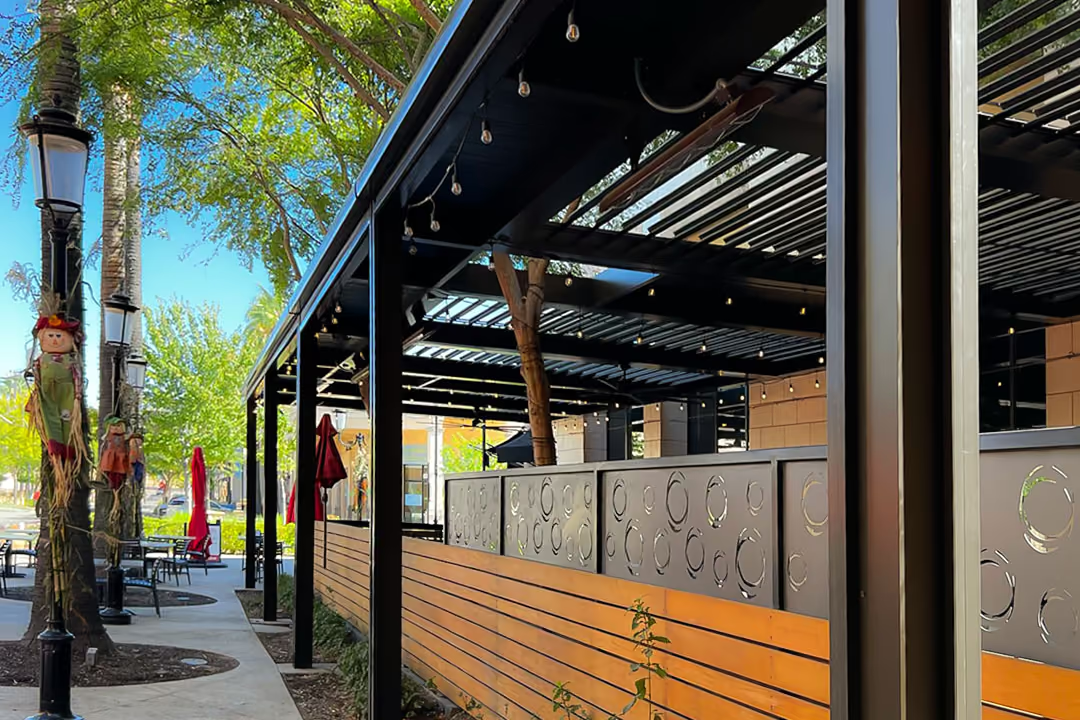
Commercial Awning vs. Louvered Pergola: Which Fits Your Business?
Fabric awnings and aluminum louvered pergolas compared for storefronts, restaurants and hotels.
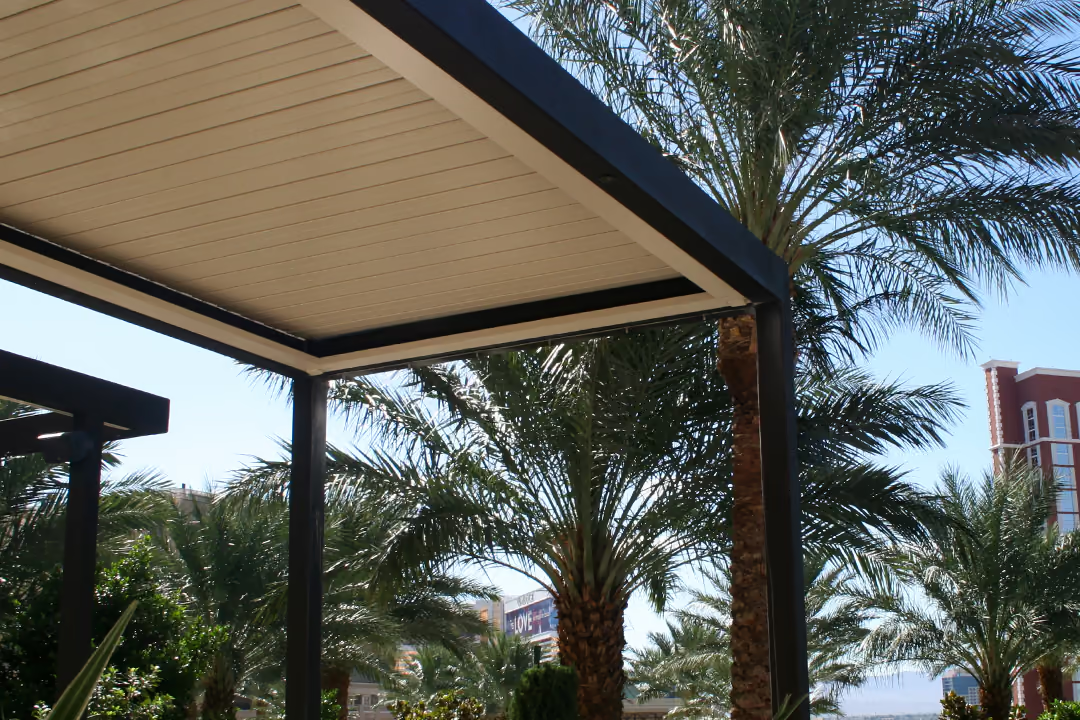
Commercial Pergolas: A Buyer’s Guide for South Florida Businesses
How commercial pergolas differ from residential ones, which roof to choose and what to plan before the quote.
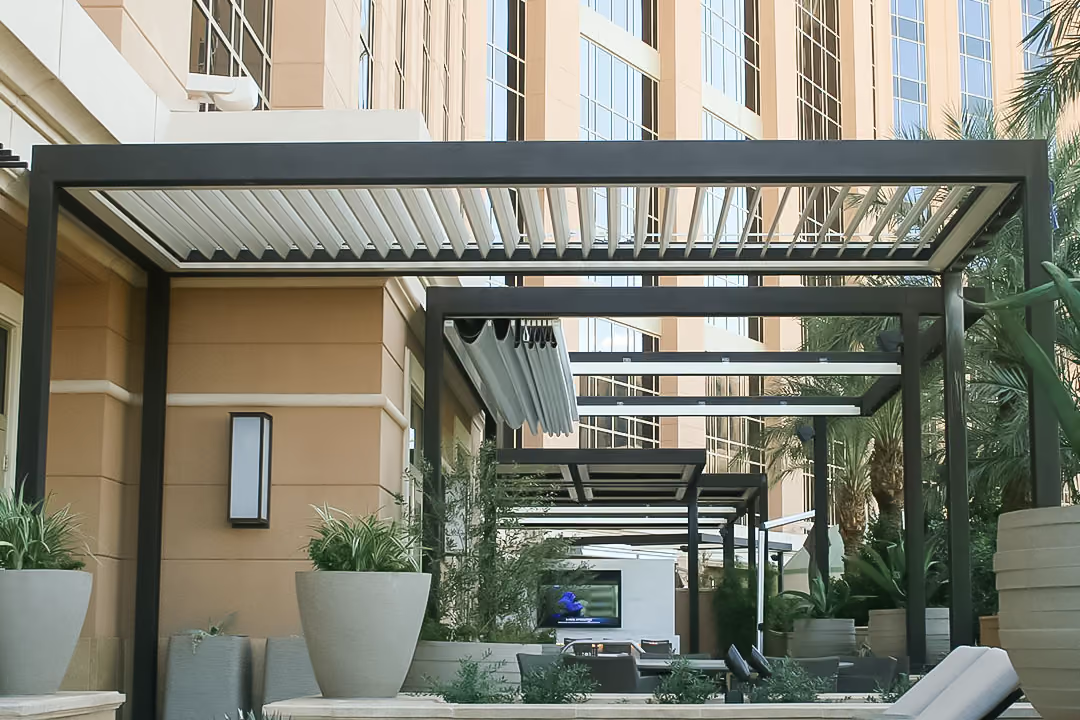
Commercial Pool Shade Structures for HOAs and Condos
How HOA and condo boards can plan durable shade for a shared pool deck, from options to approvals.