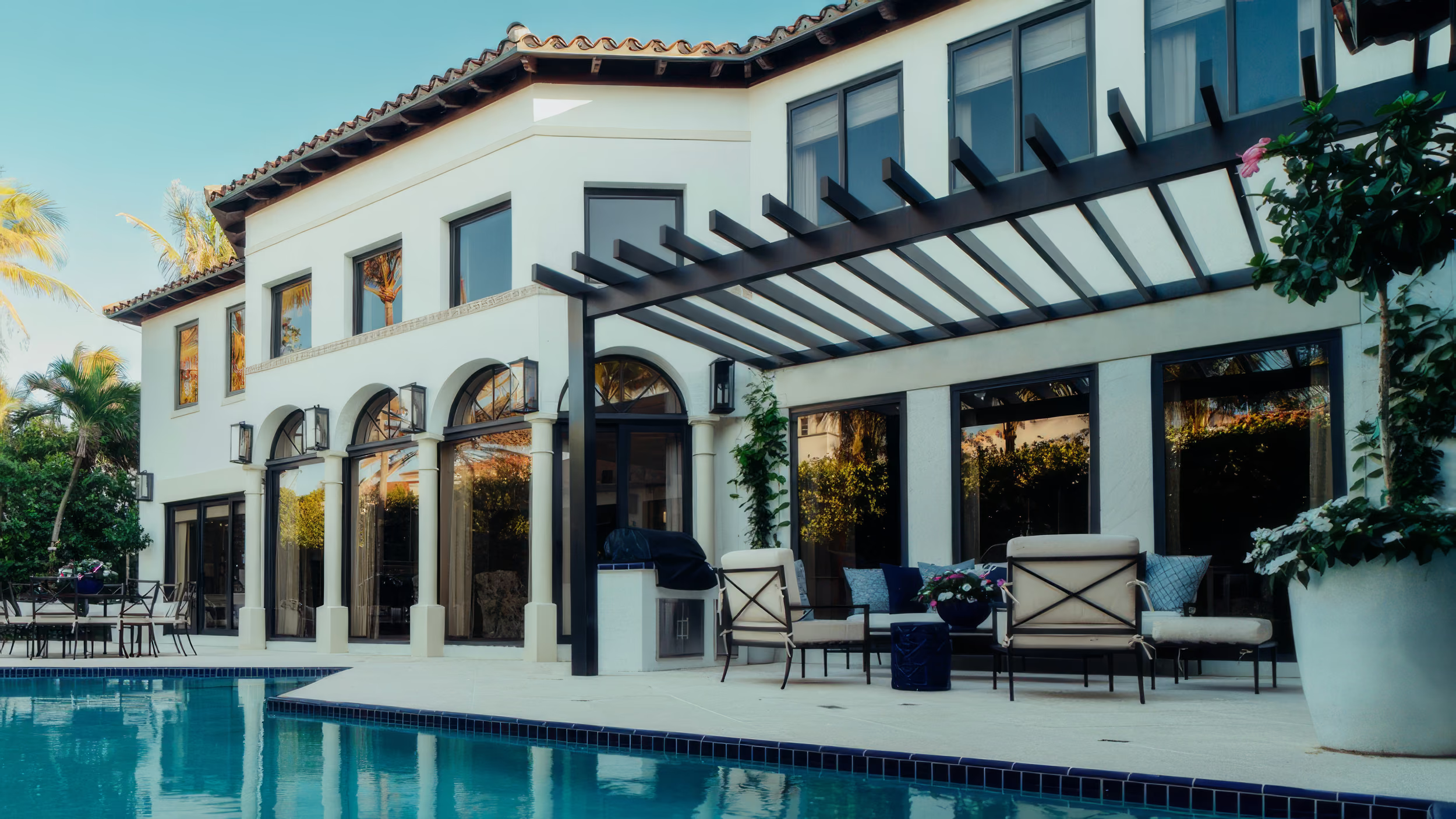
Commercial Pergolas: A Buyer’s Guide for South Florida Businesses
How commercial pergolas differ from residential ones, which roof to choose and what to plan before the quote.
A pergola over a restaurant patio, a hotel pool deck or a condo amenity area does a different job than one behind a house. It is used by the public every day, it is part of how the business makes money, and it has to stand up to South Florida weather for years with little downtime.
This guide covers what changes when the project is commercial, and what to have clear before you ask for a quote.
What Makes a Pergola “Commercial”
The structure may look similar, but the requirements are not:
- Use: more people, longer hours and furniture that is moved around constantly
- Code: a commercial permit, engineering for the site and, in Miami-Dade and Broward, the High-Velocity Hurricane Zone
- Utilities: lighting, fans, heaters, speakers and screens that need power and controls planned from the start
- Schedule: installation planned around opening hours, deliveries and guests
Choosing the Roof
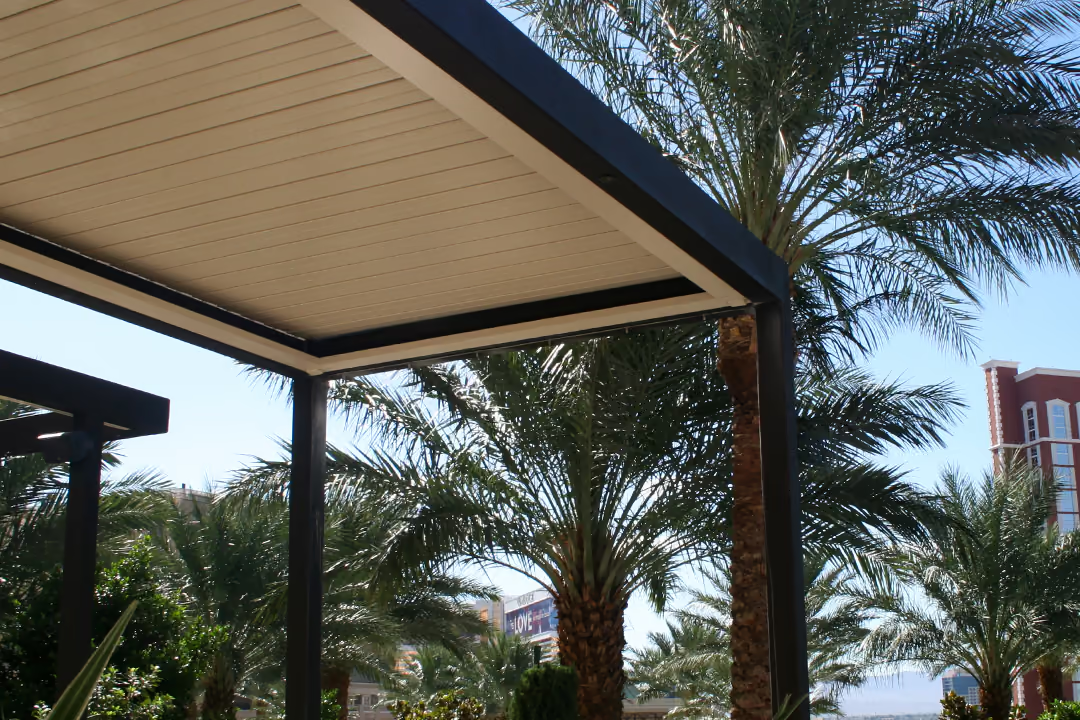
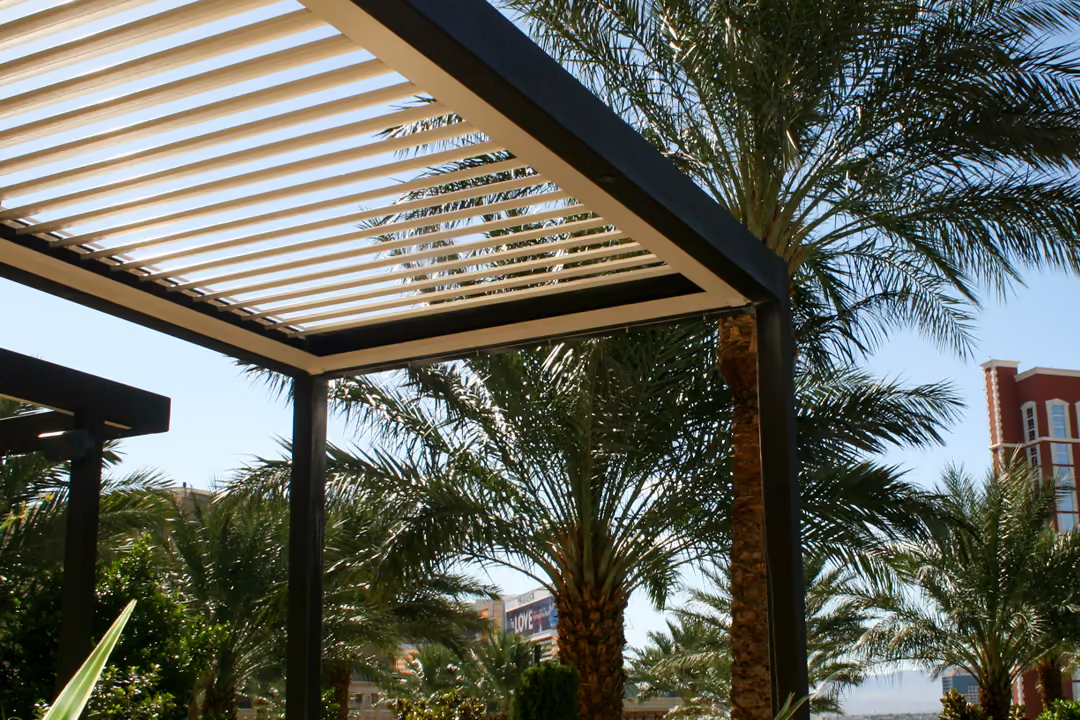
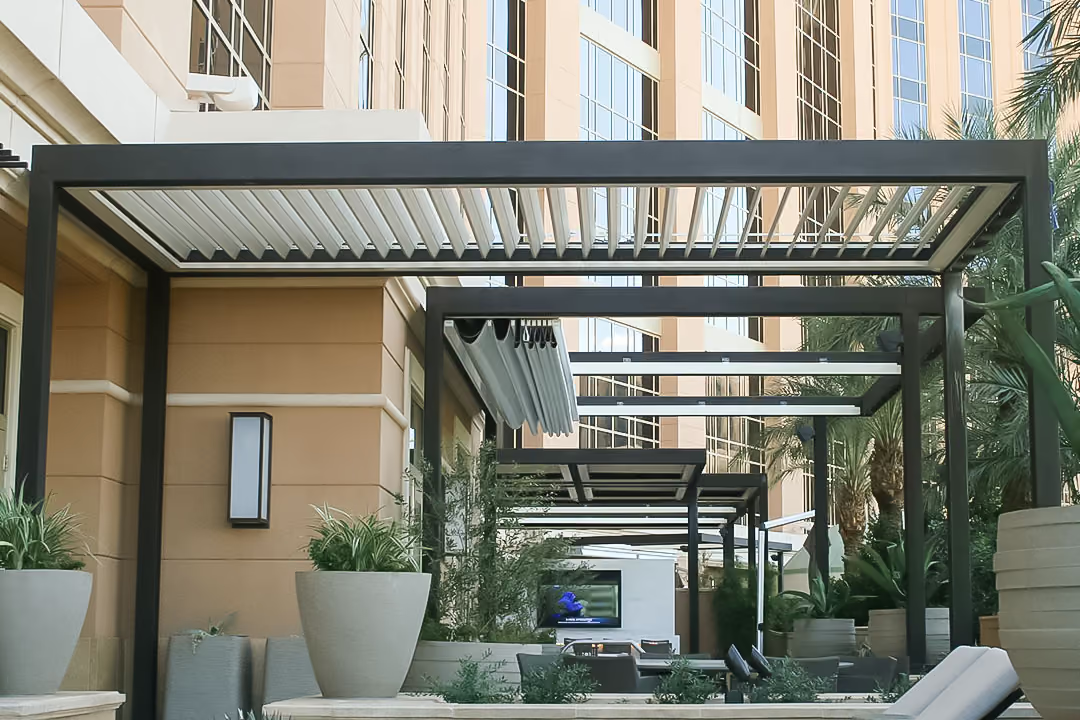
The roof decides how the space works in sun and rain. An open-air pergola gives filtered shade but no rain protection. A solid roof pergola keeps the area dry but fixes the light level. A motorized louvered roof does both: the louvers rotate to let in light and air, then close to shed rain, with the water carried away through gutters in the frame.
For businesses that sell seats, the louvered roof is usually the one that keeps the patio open on the most days, because one afternoon storm no longer clears the tables.
Built for Code in South Florida
A commercial pergola is a permitted structure. Expect engineered drawings for your site, product approvals that match the county, foundations sized for the wind loads, and inspections. Miami-Dade and Broward fall in the High-Velocity Hurricane Zone, which adds its own product-approval requirements; Palm Beach County is outside it but still builds to the Florida Building Code wind requirements.
What to Plan Before the Quote
- The area to cover and how many seats or loungers it has to hold
- Whether it attaches to the building or stands on its own
- Where rainwater from the roof can drain
- Power for lighting, fans, heaters and screens
- Who approves it: owner, landlord, association or architect
- The hours and days when work can happen without disrupting the business
Why Aluminum for Commercial Use
Wood looks warm on day one, but in South Florida it needs sealing, painting and repairs to fight rot, termites and humidity, and that maintenance has to happen around a working business. Powder-coated aluminum does not rot, does not need painting and handles salt air better, which is why it is the usual choice for restaurants, hotels and associations. Wood-look finishes are available when the design calls for warmth.
Attached or Freestanding
An attached pergola uses the building as one of its supports, which saves posts along the wall and works well for patios against a facade. It also means the connection to the building has to be engineered and, on a leased space, approved by the landlord. A freestanding pergola carries itself on its own posts and foundations, which suits pool decks, courtyards and lawns, and leaves the building envelope untouched.
Working Around Your Operations
Commercial installations are scheduled around the business, not the other way around. Foundations, deliveries and noisy work can be set for closed hours or the slowest days, and large patios can be built in phases so part of the seating stays open. Agree on access, staging and work hours before the start date so there are no surprises for staff or guests.
Frequently Asked Questions
Can a commercial pergola be relocated later?
Aluminum systems are assembled from components, so in principle they can be taken down, but foundations, permits and engineering are tied to the original site. Plan the location as permanent.
Key Takeaways
- Commercial means public use, longer hours and a commercial permit
- A louvered roof gives the most flexibility between sun and rain
- Plan drainage and power before design, not after
- See the sectors we work with on our industries we serve page
Planning a covered outdoor area for your business?
Work with a licensed and insured aluminum structure contractor serving Miami-Dade, Broward and Palm Beach County.
More on Commercial Projects
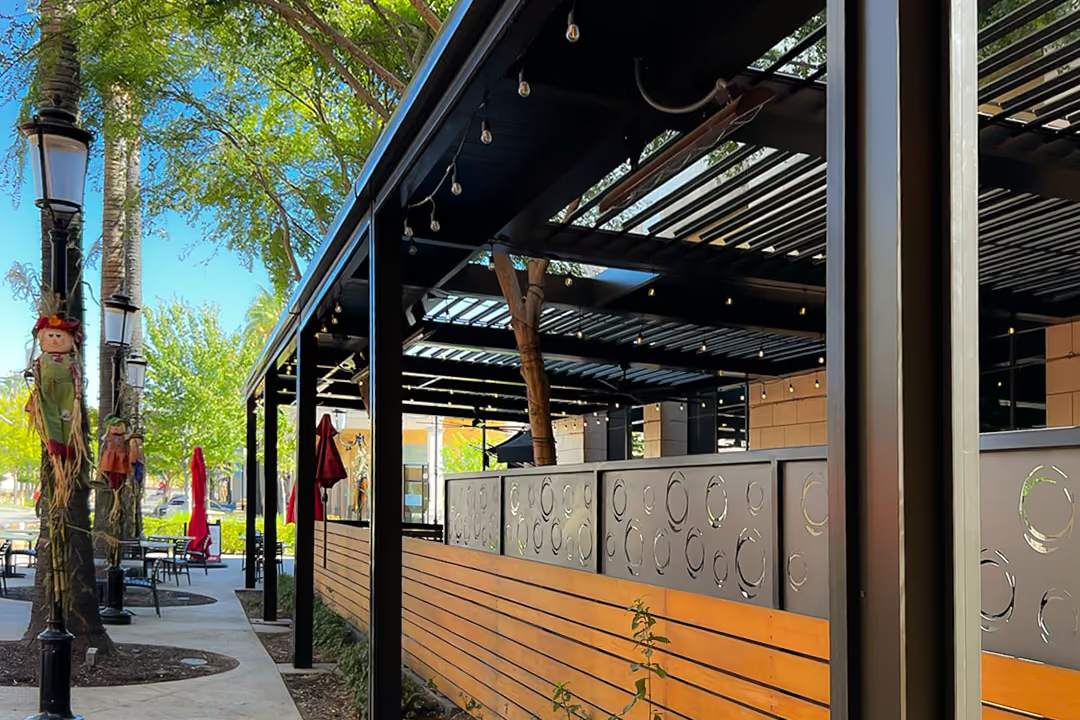
Commercial Awning vs. Louvered Pergola: Which Fits Your Business?
Fabric awnings and aluminum louvered pergolas compared for storefronts, restaurants and hotels.
Commercial Pool Shade Structures for HOAs and Condos
How HOA and condo boards can plan durable shade for a shared pool deck, from options to approvals.
Miami-Dade NOA and the HVHZ: What Commercial Pergolas Need to Pass Code
What the High-Velocity Hurricane Zone and product approvals mean for a commercial pergola, for owners, GCs and architects.