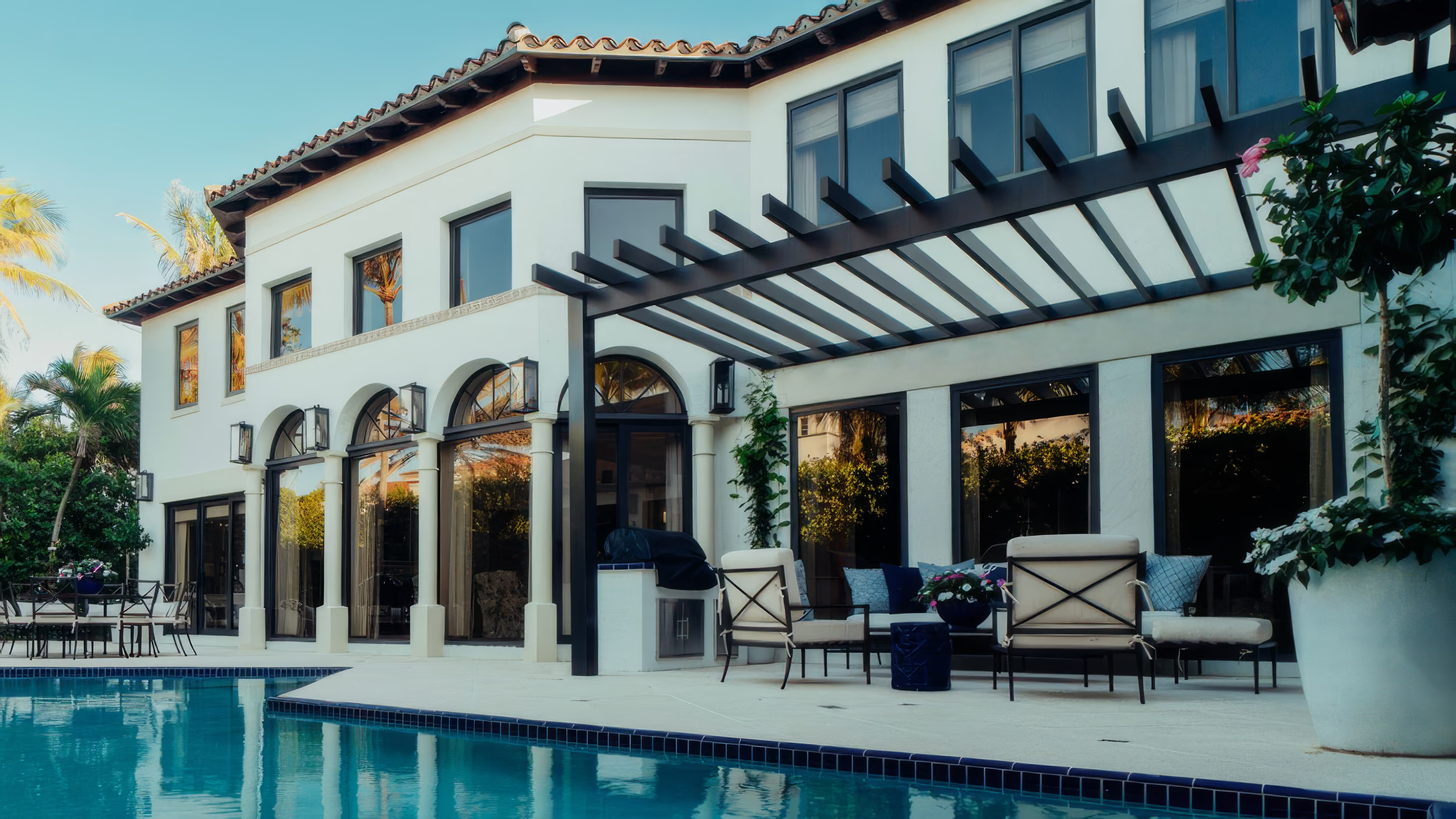
Motorized Screens for Restaurant and Hotel Patios
How motorized screens extend the use of restaurant and hotel patios, and where to put them first.
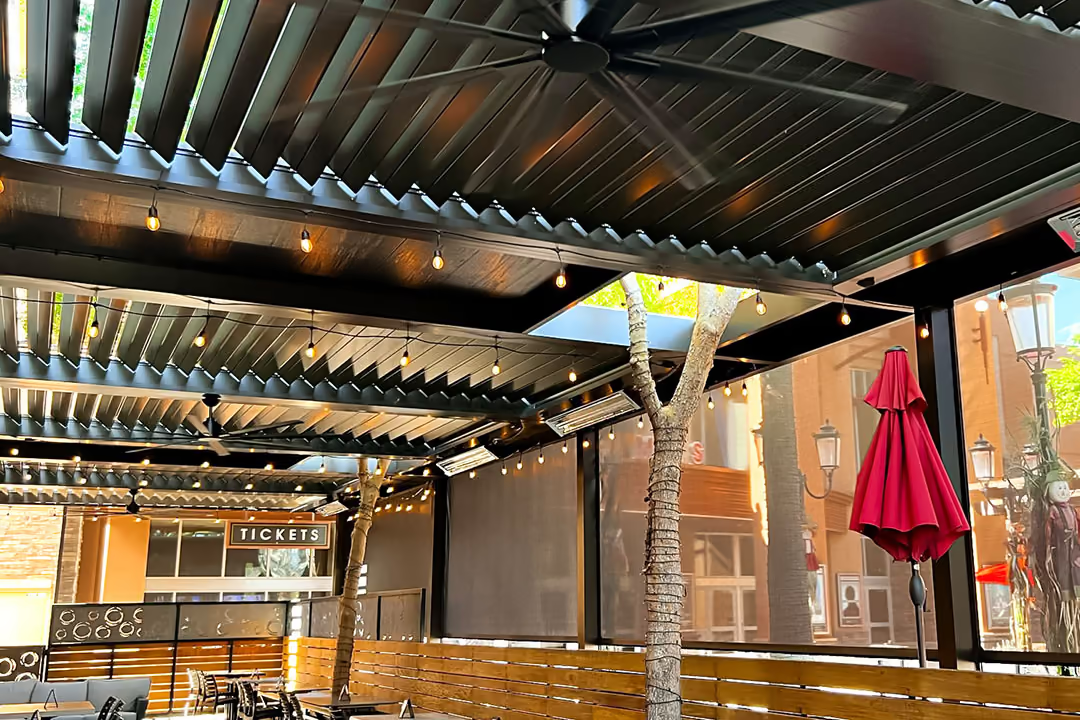
A roof handles the sun overhead and the rain that falls straight down. What empties a South Florida patio just as often comes from the side: low afternoon sun, wind off the water, rain pushed sideways and insects at dusk. Motorized screens close those sides when needed and disappear when they are not.
Where to Put Them First
Most patios do not need every opening screened. Start with the side that takes the afternoon sun or the prevailing wind, then the side facing a street, parking or neighbors. Screening every side can turn an open-air space into a box and multiplies the cost.
Fabric and Visibility
Screen fabrics reduce heat gain and glare while keeping the view out and some airflow. The tighter the weave, the more privacy and shade, and the less view. For a restaurant, the right choice usually keeps the street visible from the table.
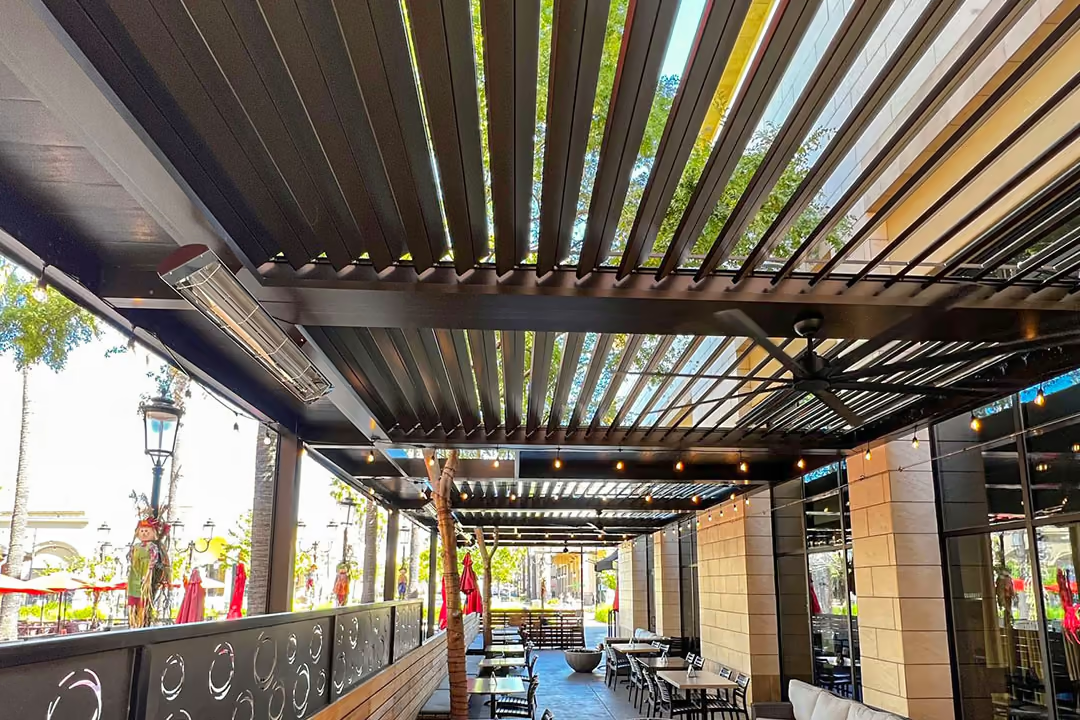
Controls for Busy Staff
- Group controls so one button sets the whole patio
- Obstacle detection that stops the screen if something is in the way
- Integration with the louvered roof, lighting and heaters
Storm Procedures
Screens are designed for everyday wind and rain, not for hurricanes. Follow the manufacturer’s limits and retract them when strong wind is forecast. Make it part of the property’s storm checklist, together with securing furniture.
Built Into the Structure
Screens work best when they are planned with the pergola: housings hidden in the beams, side tracks in the posts and wiring run inside the frame. That gives a clean look and keeps the fabric guided in the wind. Adding them later is possible, but planning them from the start avoids visible boxes and cables.
Adding Screens to an Existing Patio
Many restaurants and hotels already have a covered patio and only need the sides. Screens can often be added to an existing structure if the frame can carry them and there is a clean place to mount the housings. Measure each opening, check the structure and confirm power before choosing the system.
Care and Maintenance
Rinse the fabric and tracks periodically to remove salt, dust and pollen, especially near the coast. Do not lower screens onto furniture or let them run while something is in the way. A periodic check of the motors and tracks keeps them running smoothly through daily use.
Frequently Asked Questions
Will screens block the view of the street or the water?
Screen fabrics come in different openness levels. A more open weave keeps the view and lets more air through; a tighter one gives more shade and privacy. Different sides of the same patio can use different fabrics.
Do screens keep out mosquitoes?
Lowered screens with side tracks close the openings and keep most insects out. Gaps at the floor and corners matter, so the bottom bar and tracks should be fitted to the actual floor.
Can screens be controlled from a phone?
Many systems work with a remote, a wall switch, an app or a building automation system, and can be grouped with the roof and lighting.
How long does installation take?
It depends on the number of openings and whether the screens go on a new or an existing structure. Your quote should include a schedule planned around service hours.
Key Takeaways
- Screens handle what comes from the side: sun, wind, rain and insects
- Screen the worst side first
- Retract them before strong wind
Want to screen your patio against sun, wind and bugs?
Work with a licensed and insured aluminum structure contractor serving Miami-Dade, Broward and Palm Beach County.
More on Commercial Projects
Commercial Awning vs. Louvered Pergola: Which Fits Your Business?
Fabric awnings and aluminum louvered pergolas compared for storefronts, restaurants and hotels.
Commercial Pergolas: A Buyer’s Guide for South Florida Businesses
How commercial pergolas differ from residential ones, which roof to choose and what to plan before the quote.
Commercial Pool Shade Structures for HOAs and Condos
How HOA and condo boards can plan durable shade for a shared pool deck, from options to approvals.