Outdoor Amenities for Multifamily Properties: Where Shade Pays Off
Where shade structures make the biggest difference for apartment and condo amenities, and how to plan them.
For apartment communities and condo buildings, outdoor amenities are part of what residents compare when they choose where to live. In South Florida, the difference between an amenity that is used and one that sits empty is often shade.
Where Shade Makes the Difference
- Pool decks, where residents spend the longest time in the sun
- Rooftops and terraces with views but no cover
- Outdoor fitness areas that are too hot to use most of the day
- Grill stations and outdoor kitchens
- Lounges and game areas that could host events
Built for Shared Use
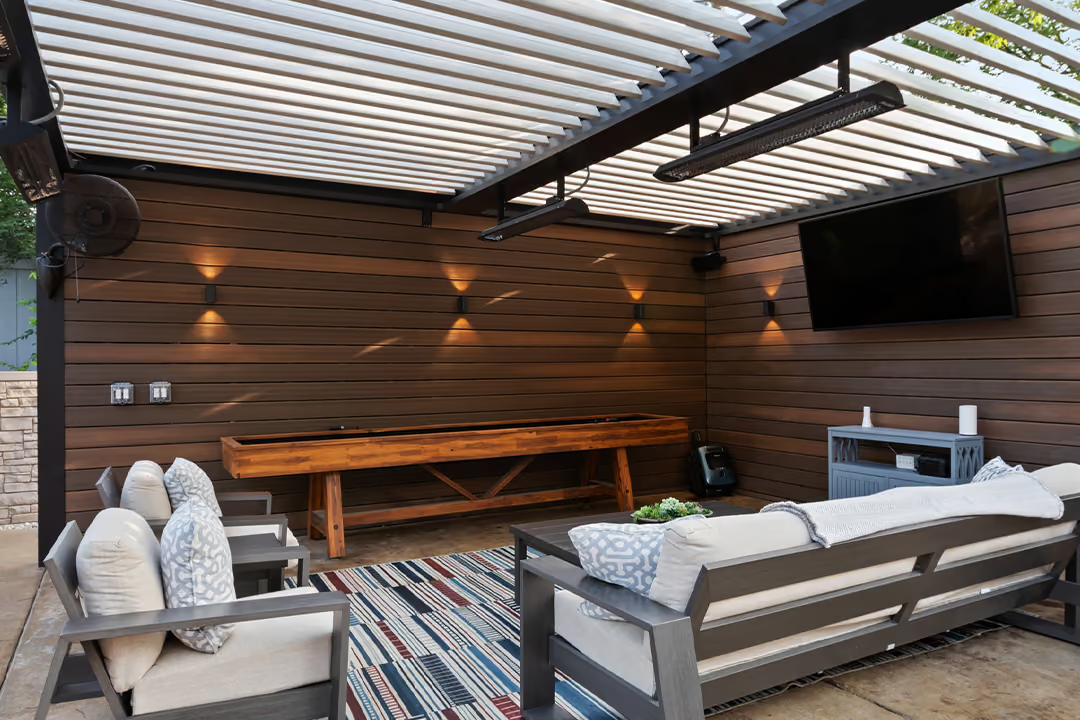
Common areas see heavy use and little babying. Aluminum structures with a powder-coated finish do not need painting or sealing, and a louvered roof lets the property manager set it open or closed without staff moving umbrellas every day. Fans, heaters, lighting and outlets can be built into the frame.
Planning for Property Managers
- Start with the amenity residents ask for most
- Confirm approvals: ownership, association or lender as applicable
- Plan power and drainage with the building’s systems
- Phase installation so amenities stay partly open
See how we work with property owners and managers on our industries we serve page.
Pool Decks
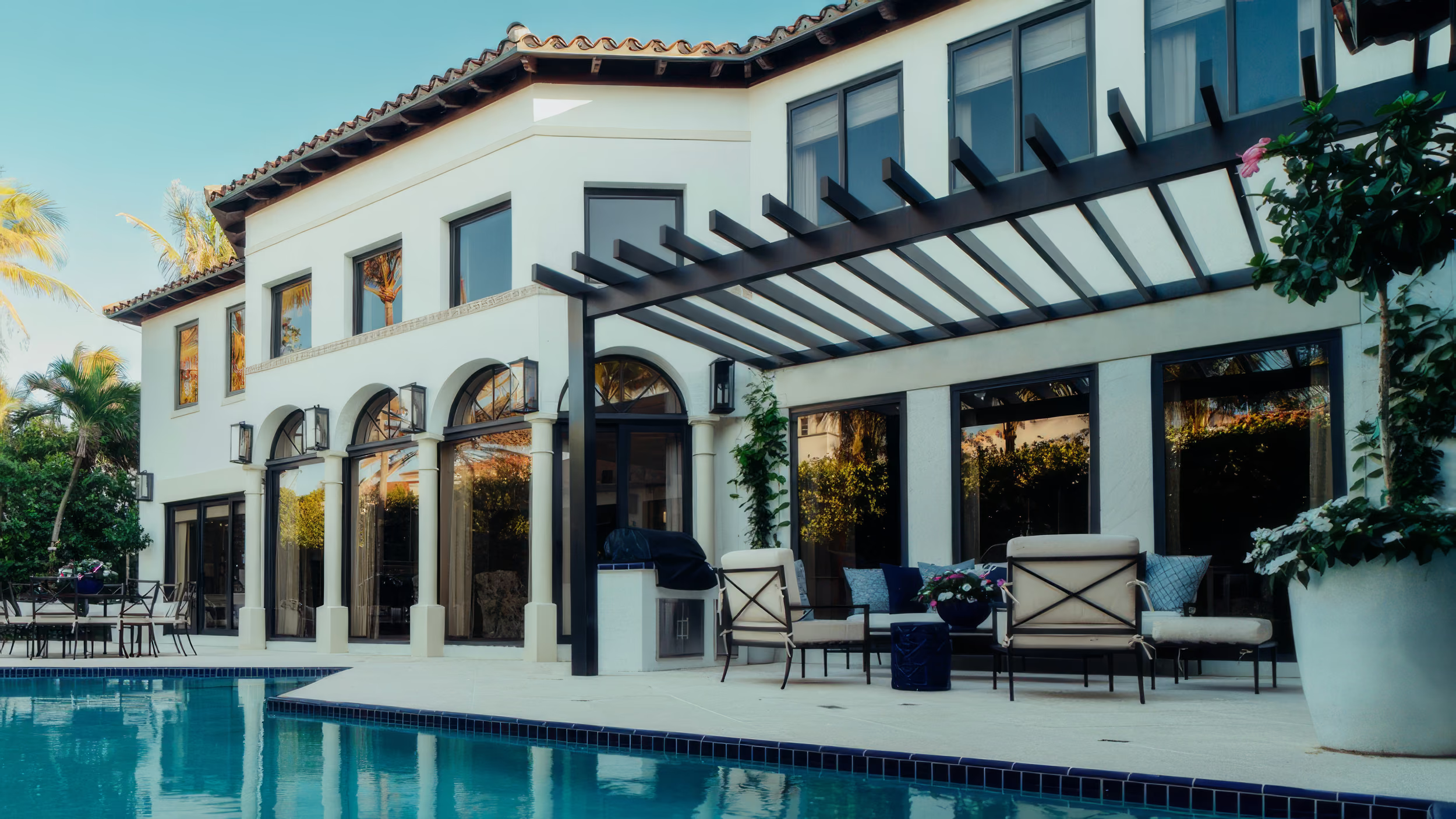
The pool is usually the most photographed amenity and the one that suffers most from sun. Louvered pergolas or cabanas along one side give residents a shaded place to stay, and the open part of the deck stays available for sunbathing. Integrated lighting extends use into the evening, when most residents are home.
Rooftops and Fitness Areas
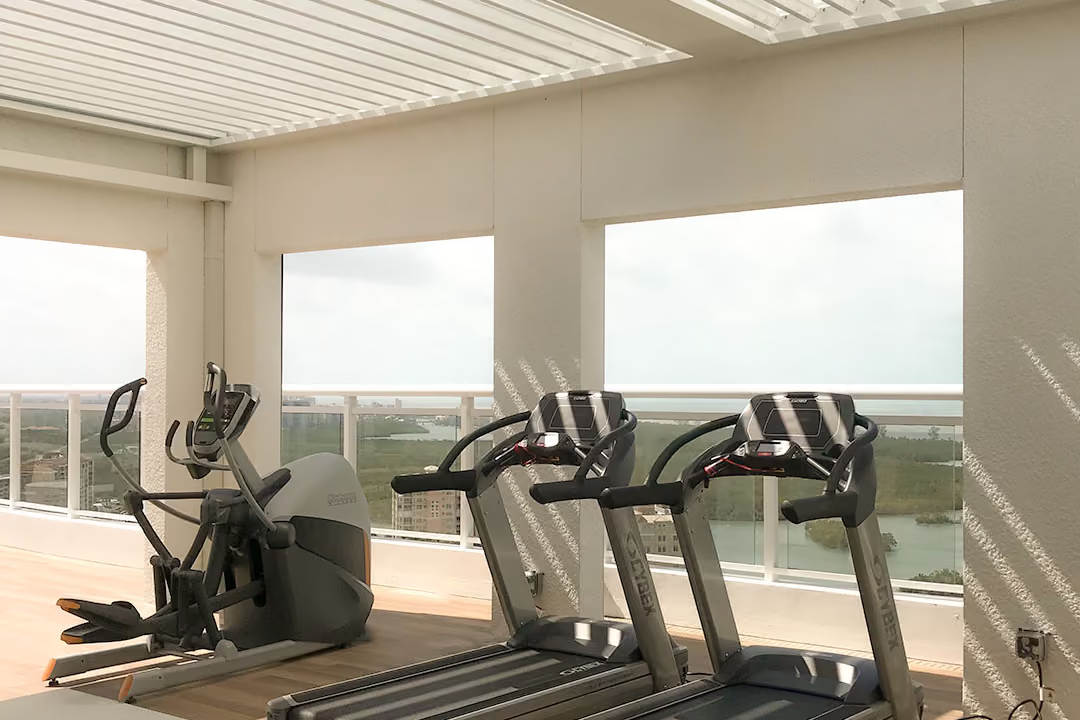
An open rooftop or outdoor gym is hard to use for most of a South Florida day. A louvered roof makes it usable in the morning and evening and protects equipment from rain. On rooftops, the structure has to be engineered for the higher wind exposure and anchored without damaging the roof membrane.
Grills and Gathering Spaces
Grill stations and outdoor lounges become event spaces when they are covered, lit and protected from passing showers. Keep the manufacturer’s clearances between grills and the structure, and plan ventilation so smoke does not collect under a closed roof.
Frequently Asked Questions
Do shade structures help market the property?
Covered, well-lit outdoor amenities photograph well and give leasing teams and associations something concrete to show. More importantly, residents use them, which is what makes an amenity part of why people stay.
Which amenity should we shade first?
The one residents ask for most and use least because of the sun. Resident feedback, staff observations and how often each space is reserved usually point to the same place, very often the pool deck.
Can shade structures be added during a broader renovation?
Yes, and it is often the best moment: foundations, power and drainage can be planned with the rest of the work, and residents deal with one construction period instead of two.
Who maintains the structure?
Routine cleaning fits into the property’s regular maintenance. Ask for a written maintenance schedule so the staff knows what to clean and when.
Key Takeaways
- Shade turns hot, empty space into amenities residents use
- Aluminum and louvered roofs suit heavy shared use
- Plan approvals, power and phasing early
Looking to upgrade the outdoor amenities at your property?
Work with a licensed and insured aluminum structure contractor serving Miami-Dade, Broward and Palm Beach County.
More on Commercial Projects
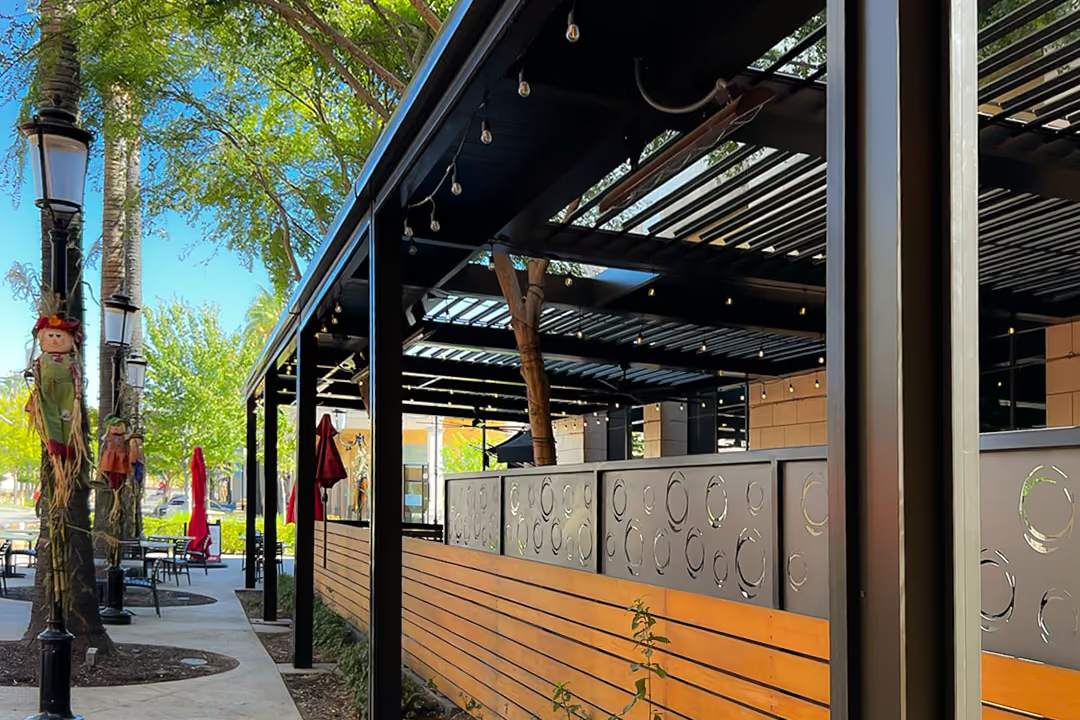
Commercial Awning vs. Louvered Pergola: Which Fits Your Business?
Fabric awnings and aluminum louvered pergolas compared for storefronts, restaurants and hotels.
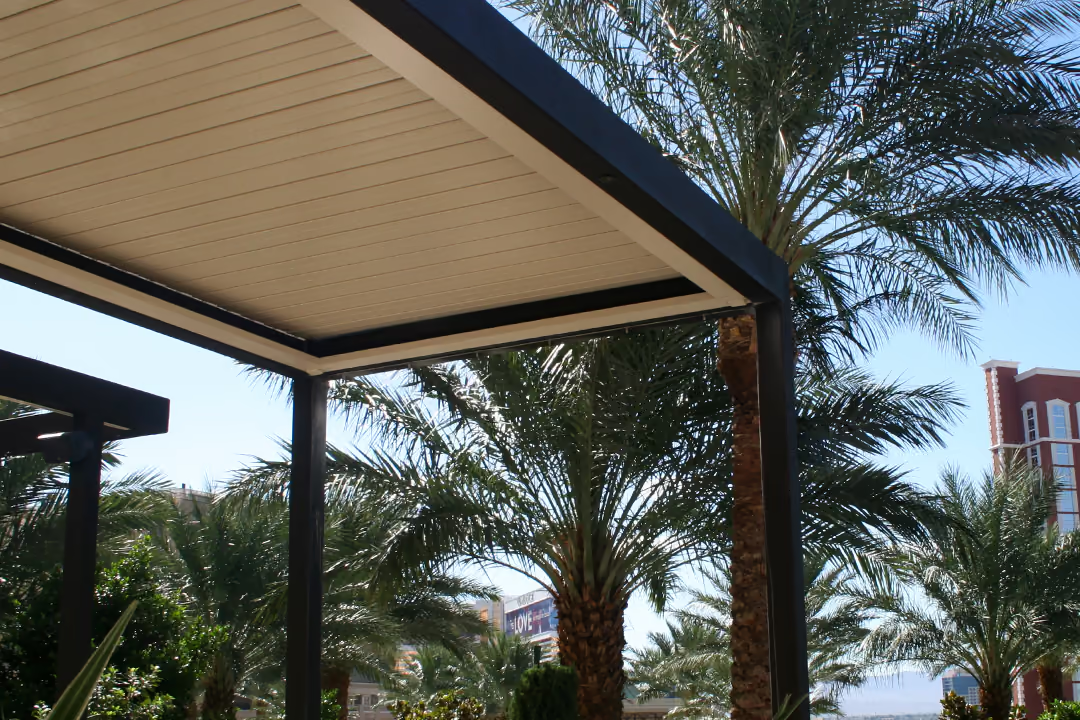
Commercial Pergolas: A Buyer’s Guide for South Florida Businesses
How commercial pergolas differ from residential ones, which roof to choose and what to plan before the quote.
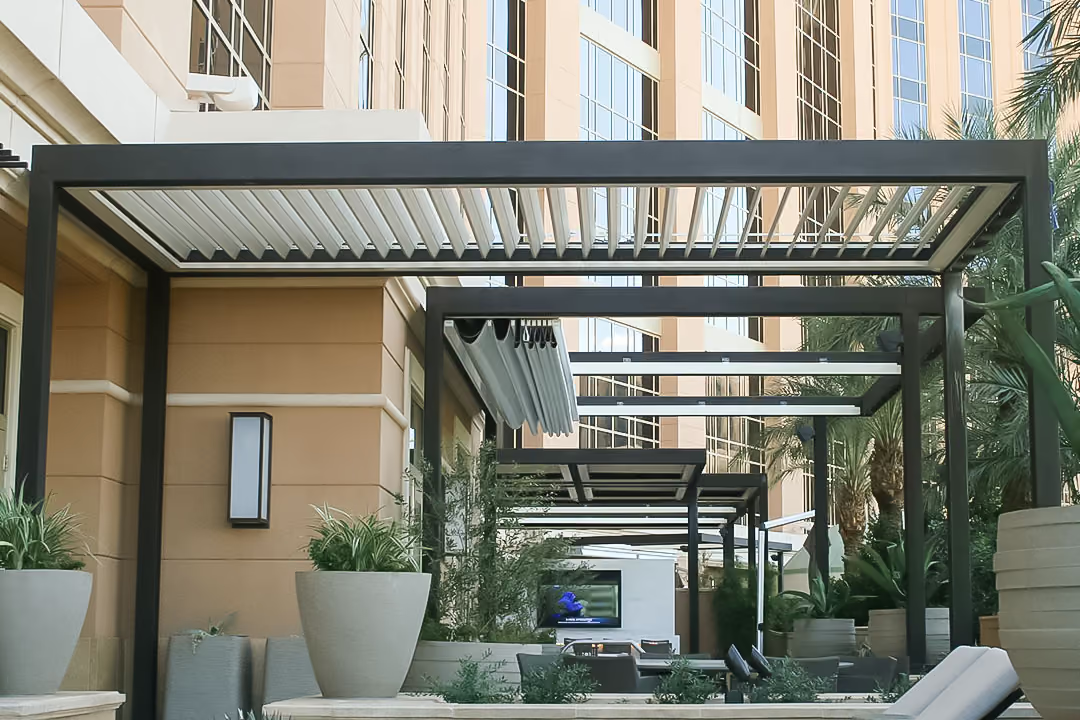
Commercial Pool Shade Structures for HOAs and Condos
How HOA and condo boards can plan durable shade for a shared pool deck, from options to approvals.